Electric Water Heater in Bartlett, IL
An electric water heater in Bartlett is quiet and simple, which makes it easy to forget until a shower turns cold. We connect you with experienced local pros who can tell element trouble from a thermostat fault.
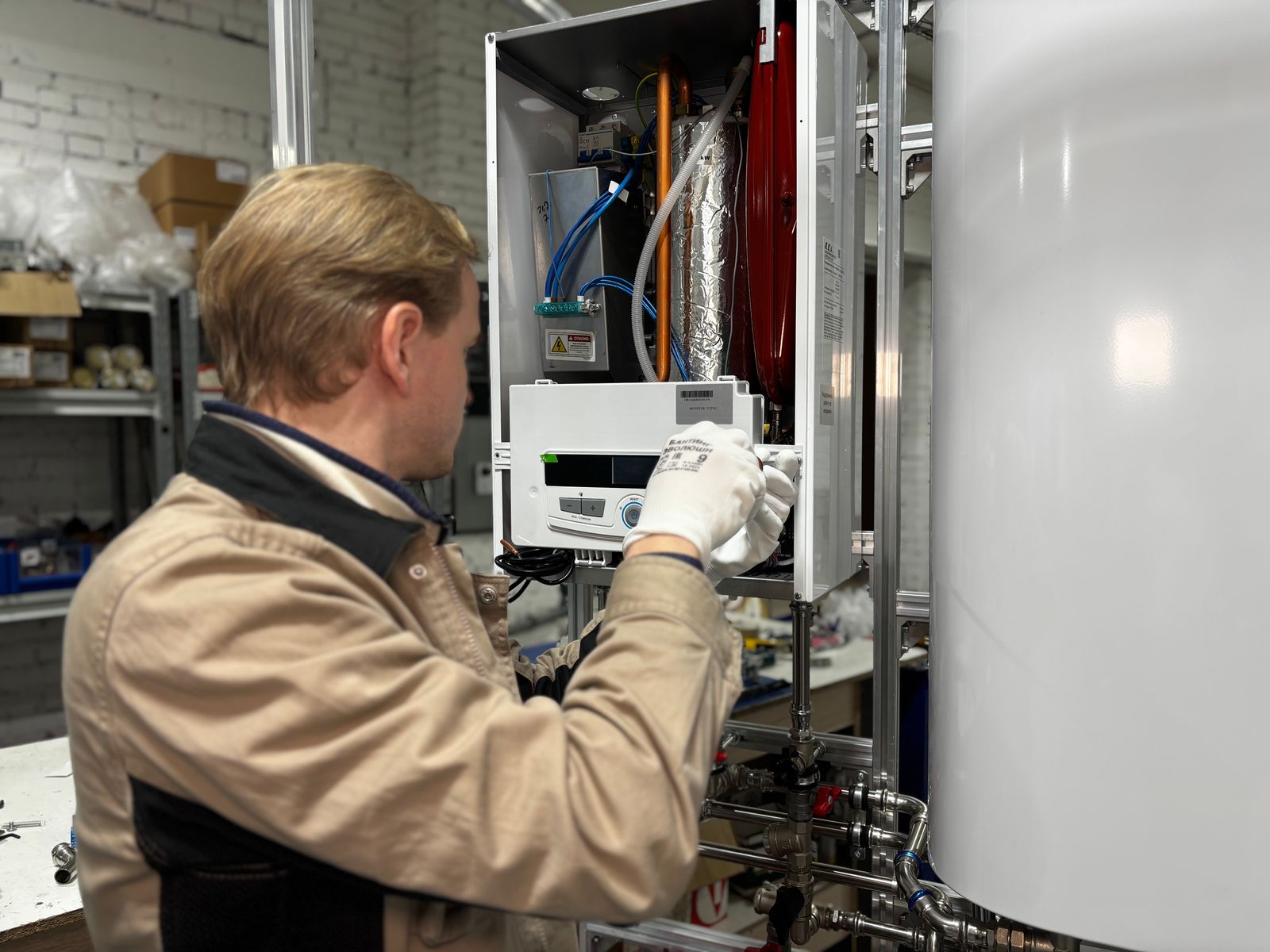
- Elements, thermostats and the reset button explained without the jargon.
- Heat pump and standard electric options compared for Bartlett homes.
- Repair or replace: an honest answer based on the tank in front of you.
When an electric tank stops heating, runs out halfway through a shower or keeps tripping its reset button, the cause is usually one of a few parts. We connect you with experienced local pros who work on an electric water heater in Bartlett townhome closets, garages and basements, and who explain what they find in plain terms.
Call and describe what is happening. You get straight answers on repair versus replacement, with the upfront price before work begins. The sections below walk through how the unit works so you know what the tech is talking about when you do.
How an electric water heater works
An electric tank heater has no flame, no flue and no gas line. Two heating elements reach into the tank, one near the top and one near the bottom, and each has its own thermostat. Cold water enters through the dip tube at the bottom, the lower element warms it and the upper element tops up the hot water at the outlet.
A high-limit safety switch, the reset button behind the upper panel, cuts power if the water gets too hot. That button protects the tank, and if it keeps tripping, something is wrong that a pro needs to find. Please leave the panels closed and the breaker alone.
Like any tank, it also has an anode rod fighting rust and a relief valve guarding pressure. Moderately hard Lake Michigan water leaves scale and sediment behind, and in an electric tank that matters more than people expect, because minerals bake onto the elements while a layer settles on the bottom.
Electric water heater element replacement and thermostat repairs
Elements and thermostats are the parts that wear out most often, and they can be replaced on a tank that is otherwise sound. A burned-out element means either no heat at all or only a little, depending on which one failed. A thermostat that drifts or sticks can leave the water lukewarm or far too hot.
Scale is a common reason elements fail. Minerals crust over the element surface, it overheats and eventually it gives out. In moderately hard water, an element that failed inside a heavily scaled tank is a clue about the whole tank, not just the part.
This is work for a technician. The tank holds power and hot water together, and the tests involve meters and live connections. You do not need to know which part failed, only what the heater is doing, and the tech brings the likely parts.
An electric water heater element replacement is a smaller job than a full swap, but the tech checks the tank first, because a new element in a failing tank may not solve the problem.
A reset button that keeps tripping deserves the same respect. It can come from a failing thermostat, a shorted element or wiring trouble, and repeated resets only hide the cause. Let the pro find it.
When an electric water heater is not heating or runs out fast
Homeowners describe an electric water heater not heating in a few different ways, and each points somewhere different. Completely cold water often means a failed element, a tripped high-limit switch or a loss of power to the unit. Water that never gets past warm often means one of the two elements has quit.
Running out fast is a separate complaint. When only one element works, the tank gives a short supply of hot water before it turns cold. A broken dip tube, a bottom element buried in sediment or a household that has simply grown can shrink the supply as well.
Recovery rate matters on cold mornings. Incoming water is at its coldest in a Bartlett winter, so the heater has more work to do between showers, and an undersized or tired tank shows it at exactly that time.
Sediment steals capacity too. A layer on the bottom takes up room that used to hold hot water and insulates the lower element from the water it is meant to heat. A water heater maintenance visit often shows this right away.
Heat pump water heater as a replacement option
A heat pump water heater moves heat from the surrounding air into the tank instead of making it only with elements. It looks like a taller tank with a fan and compressor on top, and it often keeps electric elements as a backup. For some households it is an attractive way to replace an old electric tank.
It asks more of the space around it. A heat pump unit wants airflow, a place for condensate to drain and a room that does not get too cold, and it can be a little louder than a plain tank. A cold garage or a tight closet may not suit one, while a roomy basement might. The pro looks at the space first.
Tankless is another path. An electric tankless unit draws heavily on the home's electrical supply, so it is a conversation to have with the tech and, if needed, an electrician. Our guide to a tankless water heater goes through the tradeoffs.
| Option | How it heats | Space and setup notes |
|---|---|---|
| Standard electric tank | Two elements heat stored water | Simple and familiar; fits most closets and basements |
| Heat pump water heater | Pulls heat from room air, elements as backup | Needs airspace, a condensate drain and a room that is not too cold |
| Electric tankless | Heats water as it flows | Draws heavily on the home's electrical supply; no stored volume |
Repair or replace on an electric unit
Elements, thermostats and the high-limit switch are repair items. If the tank is dry, the connections are sound and the fault is one of those parts, a repair is usually sensible. A tech who reads the model label first can often bring the right parts.
Replacement comes into view when the tank itself fails. Water at the base, rusty streaks or a tank that has steadily lost capacity mean the steel is the problem. A bad element in a heavily scaled tank can tilt the decision too, since another failure may follow.
The label on the side shows the model and serial number, which tells the tech how old the tank is. Bring that to the call along with a description of what you notice.
If replacement wins, the job follows the same pattern as any water heater installation: shut off, drain, disconnect, set and connect the new tank, then confirm it heats properly. The pro also looks at the drain pan, the relief valve line and whether an expansion tank belongs on the system.
Options, the upfront price and a straight recommendation come on the phone first, with nothing hidden.
Where an electric water heater in Bartlett sits
Most single-family homes in Bartlett keep a gas heater in the basement, so an electric tank is often the exception. You find them where the setup suits them: finished basements, upstairs utility rooms, garages and the closets of slab ranch townhomes. A tank in a closet with a louvered door gets little airflow, which is worth knowing if you are looking at a heat pump unit.
Late-1990s homes in Westridge mostly run on gas, so owners there who are weighing a switch can start with the page on water heater repair in Westridge. The 2000s homes of Heron's Landing on the Cook County side are newer, and water heater repair in Heron's Landing covers what a tech usually checks in a house of that age.
Cold winters make a weak heater obvious, and a garage tank has to work with very cold incoming water and cold surroundings. Lake Michigan water that is generally moderately hard leaves scale on elements and sediment on tank floors.
Other causes a tech sees on tank heaters are covered where we explain water heater repair in Bartlett from the first call onward.
Electric water heater questions from Bartlett homes
Common causes are a failed heating element, a faulty thermostat, a tripped high-limit switch or a loss of power to the unit. Which one it is takes testing by a technician. Please leave the panels and breaker alone and call so we can connect you with a local pro.
Yes. Elements are made to be swapped without replacing the tank, as long as the tank is in good shape. The tech checks for scale and leaks first, so you know whether a repair is worth doing.
That button resets the high-limit switch, which cuts power when the water gets too hot. If it trips again and again, a thermostat, an element or wiring may be at fault, and pressing it repeatedly only hides the cause. Leave it to the pro.
It depends on the space. A heat pump unit needs airflow, a condensate drain and a spot that stays reasonably warm, so a roomy basement may suit one better than a tight closet. The tech can look at the location and explain what it would take.
Often, if the space and the electrical supply allow it. A larger tank is taller or wider, and the supply has to support it. Tell the pro about your household and they will say what fits.
It is a smaller job than replacing the tank. The tank is drained, the old element comes out, a new one goes in, and the tank is refilled and tested. The tech tells you how the visit will go when you call, since it depends on the unit and what they find.
A failed element, a layer of sediment, a broken dip tube or a household that now uses more hot water can all do it. With only one working element, the tank gives a short burst of warmth before it goes cold. A technician can tell which cause fits.
Many homeowners have them flushed, because sediment collects on the bottom and scale crusts on the elements in moderately hard water. A flush is also a chance for the tech to check the tank. It is a habit worth asking about rather than a rule.
Get help with your electric water heater in Bartlett
Call now and tell us what your electric water heater in Bartlett is doing. We connect you with experienced local pros, answer calls 24/7 and explain the upfront price before work begins.